

Trust & Credibility
Trust is the currency of the web
“Trust is the currency of the new economy.”
Rachel Botsman
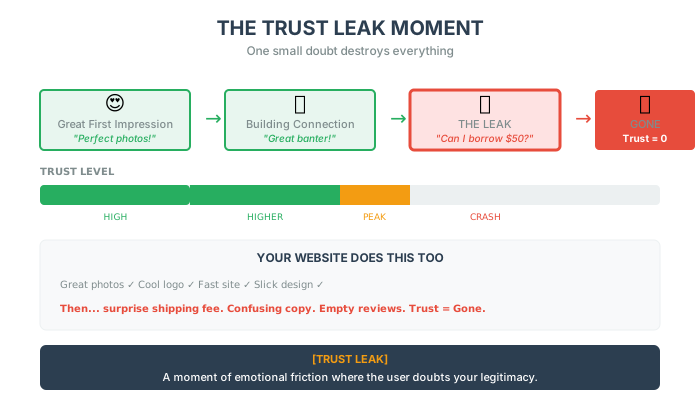
Imagine you meet someone on Tinder. Their profile is perfect. 10/10 photos. Witty bio. Great banter. You agree to meet for coffee. They show up, they look just like their photos. Everything is going great.
Then, five minutes in, they lean across the table and ask: “Hey, can I borrow $50 for gas?”
What do you do? You run.
You don’t care how good the photos were. You don’t care how funny the jokes were. The trust is gone. You feel unsafe. You are out.
This is what your website is doing to your customers.
Everything looks slick. Great photos. Cool logo. But right when they are about to buy, you do something—something small—that destroys the vibe.
I call these Trust Leaks.
The Myth of “Better UX”
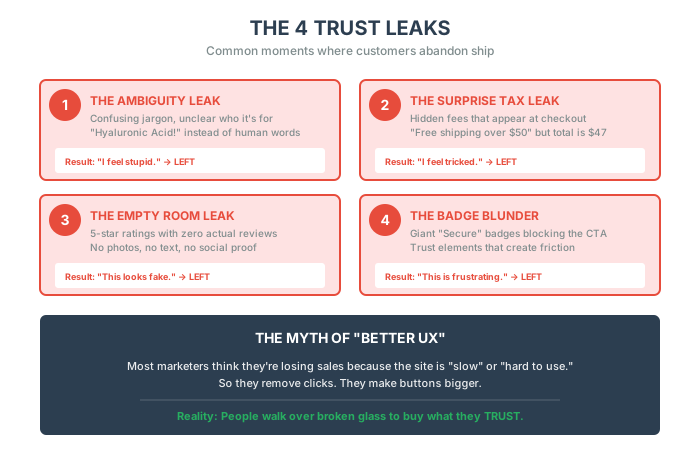
Section titled “The Myth of “Better UX””Most marketers think they are losing sales because their website is “slow” or “hard to use.” So they remove clicks. They make buttons bigger.
But the data says otherwise. People will walk over broken glass to buy something they trust. People will click away from a perfect website if they feel doubt.
[Trust Leak]: A moment of emotional friction where the user doubts your legitimacy.
It is not a technical problem. It is an emotional problem.
Identifying The Leaks
Section titled “Identifying The Leaks”I audited a skincare brand recently. Slick site. 1.2% conversion rate. They thought it was “traffic quality.” I walked through their site like a paranoid stranger. Here is what I found:
1. The “Ambiguity” Leak I wanted to buy a bundle. But I didn’t know if the cream was for dry skin or oily skin. The description was full of science words (“Hyaluronic Acid!”) but zero human words. Result: I felt stupid. I left.
2. The “Surprise Tax” Leak The banner said “Free Shipping over 47. At checkout, shipping was added. I felt tricked. Result: Anger. I left.
3. The “Empty Room” Leak The product had 5 stars. But when I clicked “Read Reviews,” there were… zero text reviews. Just stars. Result: Fake news. I left.
4. The “Trust Badge” Blunder On mobile, they had a giant “Secure Checkout” badge. It was so big it pushed the “Add to Cart” button below the fold. I had to scroll just to give them money. Result: Frustration. I left.
The Confidence Injection
Section titled “The Confidence Injection”We didn’t redesign the site. We didn’t change the offer. We just plugged the leaks.
1. Filters for Clarity We added a filter to the reviews: “Skin Type: Oily / Dry.” Now, a customer with dry skin can see that other people with dry skin love it. ** Certainty = Sale.**
2. Plain English Copy We changed “Hyaluronic Acid” to “Keeps your face wet all day.” (Basically). We made it so a 5th grader could understand who it was for.
3. The Price Bump We raised the price of the bundle to 52 gets Free Shipping. 47 + $5 Shipping feels like a fee.
The Result: Conversion rate jumped to 2.8% in 60 days. We doubled the business without spending a dime on ads.
How to Fix Your Leaks
Section titled “How to Fix Your Leaks”You can’t see the label from inside the bottle. You are too close to your own business. You need to audit yourself.
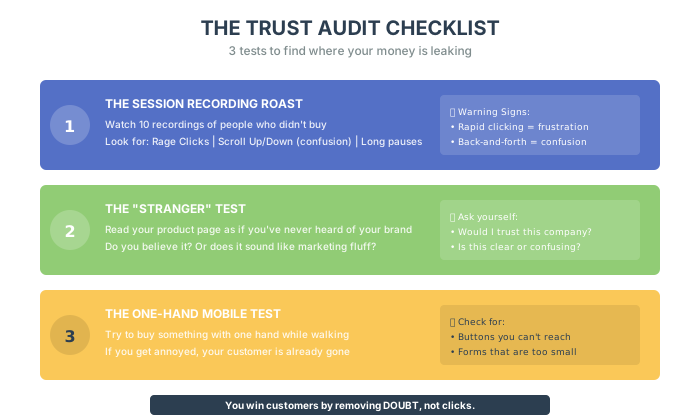
1. The Session Recording Roast Watch 10 recordings of people who didn’t buy. Look for the “Rage Click.” Look for the “Scroll Up and Down” (confusion). That is where your money is leaking.
2. The “Stranger” Test Read your product page. Pretend you have never heard of your brand. Do you believe it? Or does it sound like marketing fluff?
3. Buy It On Your Phone Go to your site. Try to buy something with one hand while walking. If you get annoyed, your customer is already gone.
The Bottom Line
Section titled “The Bottom Line”You don’t win customers by removing clicks. You win them by removing doubt.
Fix the leaks. Build the trust. Get the money.
In the next chapter, we are going to talk about the visual side of things—UX and Design—and how to look like a billion-dollar brand on a ten-dollar budget.
Five things to do this week
Section titled “Five things to do this week”- The “Stranger” Audit: Ask a friend who doesn’t know your business to buy something. Watch their face. When do they frown? That is a Trust Leak. Fix it.
- Add Review Filters: If you have more than 50 reviews, add filters. Allow people to sort by “Body Type,” “Skin Concern,” or “Use Case.” Help them find themselves in the reviews.
- Kill the Giant Badges: Check your mobile site. Do you have a massive “McAfee Secure” logo taking up half the screen? Delete it. It looks like 2005. Clean design builds more trust than ugly badges.
- Rewrite the “Ambiguous” Copy: Find your most technical product description. Rewrite it for a 5th grader. Meaning > Jargon.
- Show the Humans: Add a photo of your team or yourself to the About page. Add a “Note from the Founder” to the welcome email. Faceless brands are easy to mistrust. Human brands are hard to leave.