

Social Proof & Tribe
Deep dive into community building
“Your brand is not what you say it is. It’s what they say it is.”
Marty Neumeier
You are walking down a street in a new city. You are hungry.
You see two taco spots right next to each other.
Restaurant A: Completely empty. The waiters are staring at the door. Restaurant B: There is a line around the block. People are laughing, eating, and taking photos.
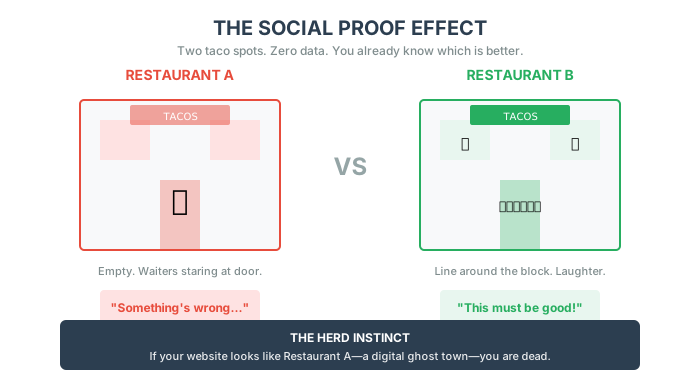
Which food is better?
You have zero data. You haven’t tasted a single chip. But you know the answer.
Restaurant B is better.
Why?
Because we are herd animals. We survive by following the tribe. If everyone else is eating there, it must be safe (and delicious). If no one is eating at Restaurant A, something must be wrong.
This is Social Proof.
And if your website looks like Restaurant A—a digital ghost town—you are dead.
The Cult of Commerce
Section titled “The Cult of Commerce”Most businesses are transactional. “I sell, you buy, goodbye.”
The best businesses are Tribal. “I lead, you join, we win.”
[The Tribe]: A group of people who see your brand not as a product, but as a badge of honor. It signals who they are.
CrossFit isn’t a gym. It’s a cult. (I mean that in the best way possible). Apple isn’t a computer. It’s a religion.
When you build a Tribe, you don’t need a sales team. The Tribe is the sales team.
Humans are wired to want to belong. When you create spaces for customers to connect, you transform impersonal transactions into trusted relationships. This fosters brand devotion that withstands the allure of deals or discounts.
Step 1: Find Your “Who” (The Sniper Rifle)
Section titled “Step 1: Find Your “Who” (The Sniper Rifle)”You cannot build a tribe of “Everyone.” If you try to sell to everyone, you sell to no one.
We’ve all been there—trying to sell products or services to an audience that just isn’t interested. No matter how amazing your offering, it falls flat if it’s not resonating with the right people.
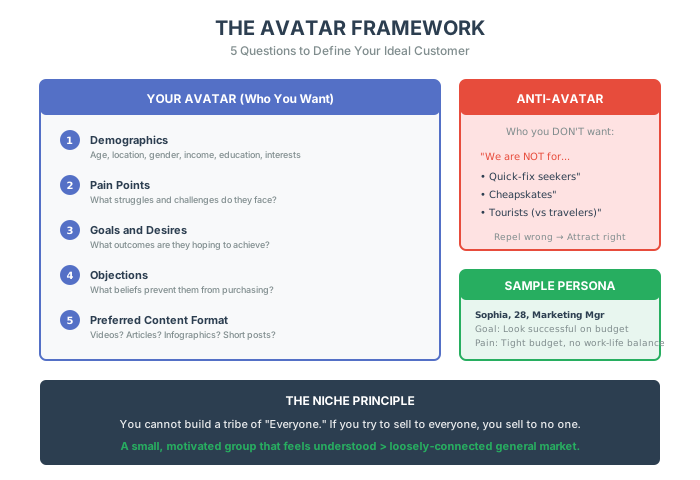
You need to define your Avatar.
Defining Your Avatar with Data and Research
Section titled “Defining Your Avatar with Data and Research”Your ideal customer won’t appear in a magical vision or speak to you in a dream. Defining your target audience takes research so you can back up your assumptions with cold, hard data.
Here are the key questions to ask as you build out your avatar:
1. Demographic Information What is their age range, location, gender, income level, education, interests, and lifestyle? Tools like Facebook Ads Manager can reveal demographic data on people already engaging with your content.
2. Pain Points What struggles and challenges does your audience face? Reading comments on social media and reviews of competing products can provide these insights.
3. Goals and Desires What outcomes is your audience hoping to achieve? What would make their life or work easier? User interviews and surveys can uncover this information.
4. Objections What beliefs or assumptions might prevent your audience from purchasing from you? Understanding these can help you craft messaging to overcome objections.
5. Preferred Content Format Do they like short posts, long-form articles, videos, or infographics? Study what performs best on your existing channels.
The more data you collect through research, the better you’ll know how to reach your audience.
The Anti-Avatar
Section titled “The Anti-Avatar”Here is the trick. Don’t just define who you want. Define who you don’t want.
- “We are NOT for people who want a quick fix.”
- “We are NOT for cheapskates.”
- “We are NOT for tourists.”
When you repel the wrong people, you attract the right people like a magnet. “That’s me! I’m not a tourist! I’m a traveler!”
Define your niche so sharply that people feel relieved to find you.
Step 2: Pinpoint Your Niche for Maximum Impact
Section titled “Step 2: Pinpoint Your Niche for Maximum Impact”A niche is a focused segment that has unique wants, needs, and characteristics. Becoming a specialist serving a narrow niche makes it easier to:
- Quickly establish your brand as an authority
- Create highly tailored offerings
- Charge premium prices
- Gain loyal evangelists who rave about your brand
For example, a general apparel brand may struggle to stand out in a broad market. However, a brand specifically helping athletes stay cool during intense training sessions would become the go-to resource for that niche.
Ask yourself these questions to zero in on your ideal niche:
- Which subset has the most intense or underserved needs related to your offerings?
- What niche aligns best with your passions, knowledge, and experiences?
- Whom has your brand helped in the past that saw incredible results using your products?
- Which segment would be the most loyal and supportive community for your brand?
The niche doesn’t have to be enormous. A small, motivated group that feels understood is more powerful than a loosely-connected general market.
Get specific. Get focused. Dominate your niche.
Step 3: Craft Detailed Buyer Personas
Section titled “Step 3: Craft Detailed Buyer Personas”A buyer persona represents a fictional, generalized version of your customers based on data and research. Personas are like your audience’s alter ego.
Here’s an example persona for a luxury brand targeting fashion-focused professionals:
Name: Sophia Age: 28 Job: Marketing Manager Location: New York, NY Goals: Climbing the corporate ladder, luxury experiences Challenges: Tight budget, lack of work-life balance Quote: “I want to look and feel successful even with my limited income right now.”
As you can see, the persona provides key details to guide content and messaging. Other helpful elements include photos, descriptions of a typical day, favorite brands, and preferred communication channels.
I recommend developing 2-4 personas that represent your core audience segments. Refer back often as you create content and campaigns with the mantra: “Would this resonate with my personas?”
The Richness Is in the Details
Section titled “The Richness Is in the Details”How specific and detailed do you need to get? The more granular, the better.
Once you intimately understand your niche’s desires, fears, and habits, you can provide extreme value.
Don’t rely on superficial demographics alone. Dig deeper by:
- Interviewing existing customers about their experience
- Finding peers who serve the same niche and are sharing insights
- Observing your audience interacting in Facebook groups and forums
- Collecting audience feedback through surveys and polls
This obsessive research pays off through authentic connections and customers for life. Know them, and they’ll trust you.
Refine Your Avatar Over Time
Section titled “Refine Your Avatar Over Time”Here’s an important truth about your ideal customer—they will evolve and change over time.
Audiences themselves shift, but your business offerings likely will as well. As you expand into new products or services, you may begin attracting new audiences.
That’s why regularly revisiting your avatar is crucial. Set reminders every 3-6 months to analyze your data and tweak your personas.
You might discover:
- Certain demographics are engaging more lately
- Your early adopters want more advanced offerings
- Neighboring niches represent untapped potential
Don’t get stuck targeting an outdated version of your audience. Commit to continuous refinement.
Pro Tip: Segment your email list based on key criteria related to your personas. Track engagement over time to identify trends. Adjust your efforts to optimize for each segment.
Step 4: Manufacture The Line
Section titled “Step 4: Manufacture The Line”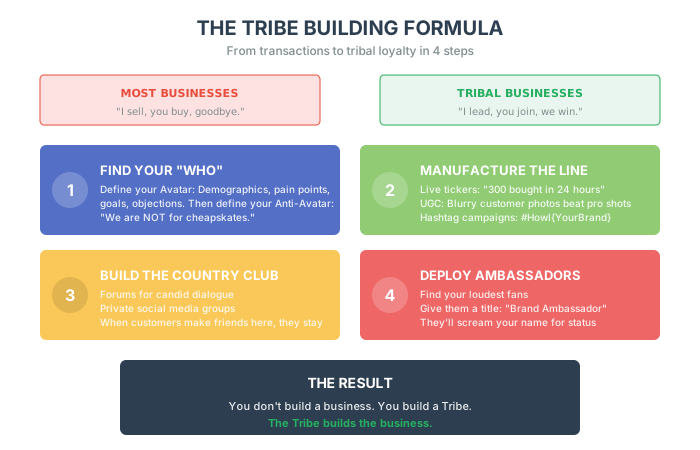
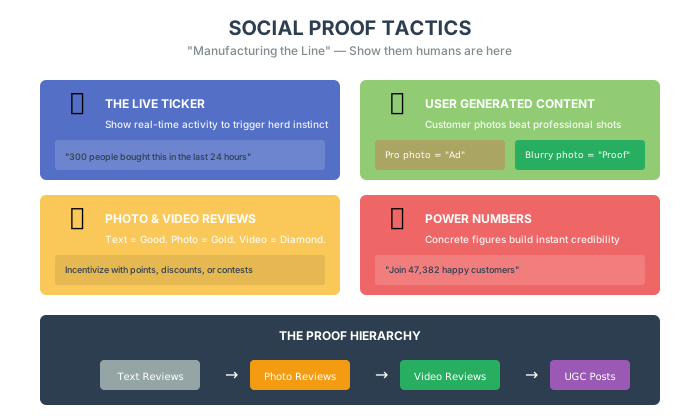
You need to show the line around the block. You need to prove that other humans are here.
1. The “Live” Ticker
Section titled “1. The “Live” Ticker”“300 people bought this in the last 24 hours.” “Jane from Austin just purchased.”
This triggers the “Herd Instinct.” I better get in line.
2. User Generated Content (The Holy Grail)
Section titled “2. User Generated Content (The Holy Grail)”A professional photo of your product is an “Ad.” A blurry photo of a customer holding your product is “Proof.”
I would take the blurry photo every single time.
Get your customers to post photos. Bribe them with points. Give them a discount. I don’t care. Get the photos. Put them on the product page.
“Look, real humans use this. And they are smiling.”
3. Hashtag Campaigns
Section titled “3. Hashtag Campaigns”Boost UGC sharing around themes like #HowI{YourBrand} or branded seasons like #SummerEssentials.
These campaigns turn your customers into content creators—and their content is more trusted than anything you could produce yourself.
Step 5: Build The “Digital Country Club”
Section titled “Step 5: Build The “Digital Country Club””Give them a place to hang out. When customers make friends in your house, they never leave your house.
The Forum Strategy
Section titled “The Forum Strategy”Online forums humanize shopping, fulfilling consumers’ needs beyond convenience and selection. Customers gain an informal support network while you tap into an insightful focus group.
Tips for brand-based forums:
- Set clear guidelines – Freedom of expression with responsibility. Explain proper etiquette.
- Seed conversations – Post open-ended questions to spark dialogue. New accessories? Creative uses?
- Respond thoughtfully – Staff should engage as equals and avoid canned corporate-speak.
- Highlight influencers – Identify valuable contributors to cultivate content creation. Request feedback on new features or exchange for perks.
When shoppers directly engage each other and feel heard by your team in a forum, casual conversations build emotional connections—even friendships. User communities generate consumer loyalty that withstands momentary price wars.
Social Media Groups
Section titled “Social Media Groups”Facebook groups and private Instagram circles concentrate your audience while protecting open sharing among fans, unlike public posts flooded with irrelevant voices.
Consider the following:
- Focus topics – Create niche communities around product lines, buyer types, usage occasions.
- Recruit carefully – Handpick active social media users aligned with your brand as co-admins/moderators.
- Spark chatter – Post eye-catching visuals, gifs, polls daily to inspire reactions and conversations.
- Crowdsource content – Encourage users to contribute reviews, images, or videos using your products. Then re-share user-generated content.
These exclusive spaces allow customers to bond around common interests while reaching your broadest audiences as co-admins magnify exposure.
Step 6: Deploy Brand Ambassadors (Status for Sales)
Section titled “Step 6: Deploy Brand Ambassadors (Status for Sales)”The most powerful community-building tactic may be formally enlisting vocal advocates as brand ambassadors. Give exceptional supporters an influential platform they love sharing.
How to Build an Ambassador Program:
Section titled “How to Build an Ambassador Program:”1. Define the program Outline activities, incentives, and guidelines transparently so expectations align. Allow creativity within limits.
2. Cast strategically Seek those intrinsically motivated to rave about you vs. perks alone. Ideal traits: authenticity, positivity, and influence.
3. Amplify reach Share ambassadors’ posts, remix approved UGC into ads, host takeovers during launches. Co-marketing expands impressions.
4. Track ROI Use unique promo codes or trackable links. Ensure the program drives measurable growth through sales, traffic, or conversions vs. vanity metrics alone.
Brand ambassadors fuse friends’ referrals with celebrities’ reach. Their vocal endorsements feel organic vs. ads and drive tangible business results.
Find your loudest fans. Give them a title: “Brand Ambassador.” “VIP Member.” Give them a special code. They will scream your name from the rooftops just to keep that status.
Additional Community Tactics
Section titled “Additional Community Tactics”Livestreams
Section titled “Livestreams”Host real-time video events unveiling new products where viewers ask questions. Humanize your company and create urgency around launches.
Referral Rewards
Section titled “Referral Rewards”Offer customers discounts for getting others to purchase. This creates evangelists who have a financial incentive to spread your message—but the incentive feels like a gift, not a bribe.
Loyalty Programs
Section titled “Loyalty Programs”Provide VIP access, exclusive sales, and perks for top-tier purchasers. Validate devoted customers and make them feel special. When you acknowledge their commitment, they commit even harder.
Create Content That Resonates
Section titled “Create Content That Resonates”Armed with detailed data on your ideal customers, create content that captivates them:
Blog posts and articles: Address common pain points and questions from your niche. Write in a conversational tone using “you” frequently.
Social media: Share motivational quotes, relevant news, and quick tips ideal for platforms like Twitter and Instagram.
Videos: Create tutorials for overcoming challenges faced by your personas or showcase client success stories.
Infographics: Turn complex data into digestible visuals that provide value.
Webinars: Dive deeper into key topics and allow live interaction between you and your audience.
Podcasts: Feature stories and interviews relevant for your niche while also sharing your expertise.
Experiment across platforms and formats while tracking engagement to determine what your audience loves. Repurpose content to maximize resources, and promote top-performing content frequently.
Launch Products for Your Avatar
Section titled “Launch Products for Your Avatar”Perhaps the most exciting result of clearly defining your ideal customer—you can develop products and services tailored specifically for them.
For example, a consumer electronics brand who works with tech enthusiasts might create:
- A community forum where gaming enthusiasts can connect to discuss new releases, mods, builds, and troubleshooting.
- Online courses teaching baby boomers how to set up and use smart home devices.
- A mobile app that guides new product customers through setup, customization, and ongoing use via tutorials and chat support.
When brainstorming products and services, ask yourself:
- What outcome is my audience desperately seeking? How can I provide that value?
- What sort of offerings would my niche get most excited about and share with peers?
- Where are competitors failing to meet the needs of my audience currently?
Zero in on those opportunities you’re uniquely equipped to capitalize on thanks to your specialization.
The 8 Community Building Commandments
Section titled “The 8 Community Building Commandments”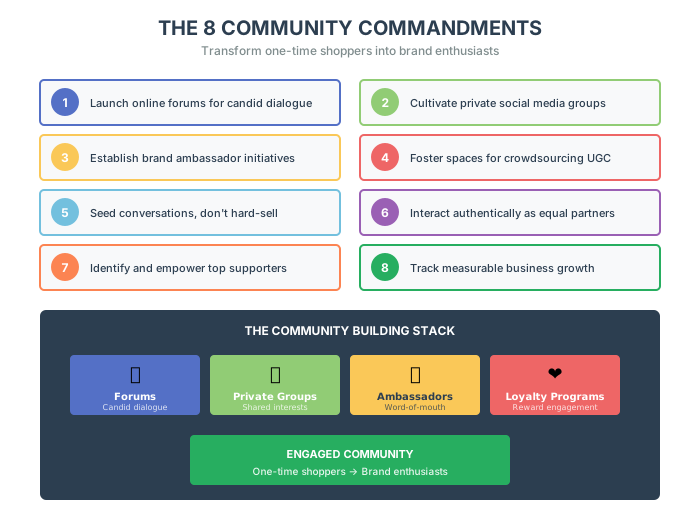
Here are the main tactics for catalyzing an engaged community around your brand:
- Launch online forums for candid dialogue and direct customer feedback.
- Cultivate private social media groups for bonding around shared interests.
- Establish brand ambassador initiatives to magnify word-of-mouth advocacy.
- Strategically foster social spaces for crowdsourcing reviews, images, and real-world usage inspiration.
- Carefully seed conversations and user contributions rather than hard-selling.
- Interact authentically within the community by responding as equal partners.
- Identify your most enthusiastic supporters and further empower their voices.
- Track measurable business growth driven by new traffic, sales, and followers.
Building spaces for customers to connect around common passions pays dividends through heightened loyalty, even customer-driven marketing.
The Bottom Line
Section titled “The Bottom Line”You don’t build a business. You build a Tribe. The Tribe builds the business.
Stop trying to convince strangers. Start leading a movement.
There’s a tribe out there for you. Individuals who will be overjoyed to discover a business that “gets them” so deeply.
Your job is to:
- Find them through obsessive research
- Speak their language through tailored content
- Provide incredible value through specialized offerings
- Give them a home through community spaces
Do this consistently, and long-term loyalty will follow.
Simply put—an engaged community transforms one-time shoppers into fully invested brand enthusiasts.
In the next chapter, we are going to talk about the currency that makes this entire engine run: Trust.
Five things to do this week
Section titled “Five things to do this week”- Write Your Anti-Avatar: Who do you NOT want? Write it down. “We are not for [Type of Person].” Put this in your FAQ or About page. Repel the wrong people to attract the right ones.
- Install a Social Proof App: Get an app like Nudgify or Proof. Show that real humans are buying. “Julie just bought [Product].” It triggers the herd instinct.
- Launch a UGC Contest: Email your list: “Best photo with our product wins 100. Put the best ones on your product page.
- Start a VIP Facebook Group: Invite your top 100 customers. Call it the “Insiders Club.” Ask them for feedback on new products. Make them feel like owners.
- Audit Your Reviews: Do you have photo reviews? If not, switch your review app to Loox or Yotpo. Text reviews are good. Photo reviews are gold. Video reviews are diamond.